Supply & Installation
Full range of portable and wheeled extinguishers — supplied, mounted, signed, and commissioned to standard.

From single-unit supply to full-site fire-fighting equipment rollouts. SANS-compliant inspection, servicing, refilling, hydro-testing, and compliance certification across South Africa.
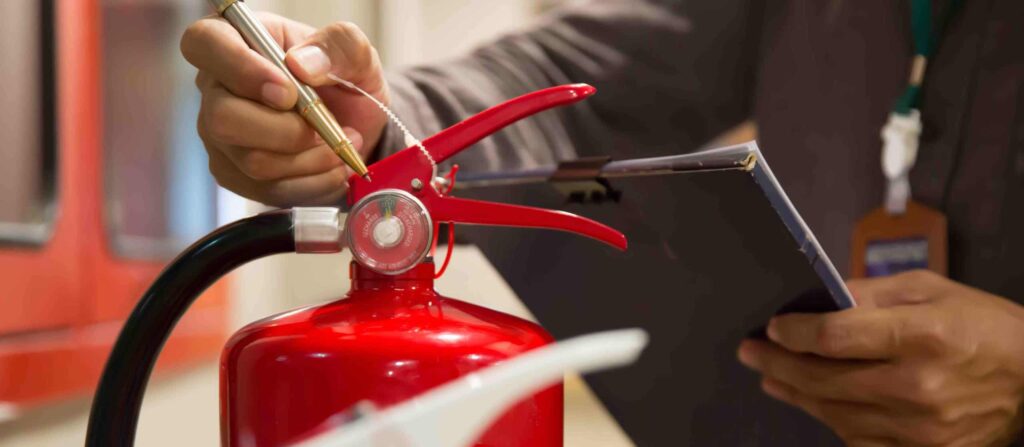 Certified Technicians
One supplier for every stage — from the initial fire risk assessment to ongoing certification.
Full range of portable and wheeled extinguishers — supplied, mounted, signed, and commissioned to standard.
Monthly and annual inspections to SANS 10105 standards, with documented inspection records.
Annual servicing, recharging, and replacement of seals, hoses, and operating mechanisms.
Five-yearly hydro-testing of cylinders to verify structural integrity and re-certify for service.
Scheduled maintenance contracts with proactive replacement before extinguishers fall out of service.
Certificates of compliance for building inspectors, insurance assessors, and OHS auditors.
Each fire class requires a specific extinguishing agent. Using the wrong type can be ineffective — or dangerous.
Ordinary combustibles — wood, paper, textiles, plastics, rubber. Cool with water or foam.
Flammable liquids — petrol, diesel, oils, paint, solvents. Smother with foam, DCP, or CO₂.
Flammable gases — methane, butane, propane, LPG. Shut off supply; use DCP if safe.
Combustible metals — magnesium, titanium, sodium swarf. Special dry-powder agents only.
Cooking media — animal fats and vegetable oils in commercial kitchens. Wet-chemical extinguishers.
We supply and service the four most commonly required portable extinguisher types in South African workplaces.
Class A only. Best for paper, wood, textiles. Cools the fuel below ignition temperature.
Classes B & electrical. Clean, residue-free — ideal for offices, server rooms, and electrical fires.
Classes A, B, C. Dry Chemical Powder — the most versatile general-purpose extinguisher.
Classes A & B. Aqueous Film-Forming Foam — excellent for flammable liquid fires.
Every routine service visit follows the same rigorous protocol so nothing is missed.
Check seals, pin, gauge, hose, nozzle, body integrity, mounting bracket, and signage placement.
Verify pressure, weigh the unit, test the operating mechanism, and check the discharge path is clear.
Refill or recharge if required, replace seals and pins, and attach the SANS-compliant service tag.
Full inspection report and Certificate of Compliance issued for your files and insurance.
A fire-ready workplace combines the right equipment, trained people, and a rehearsed evacuation plan.
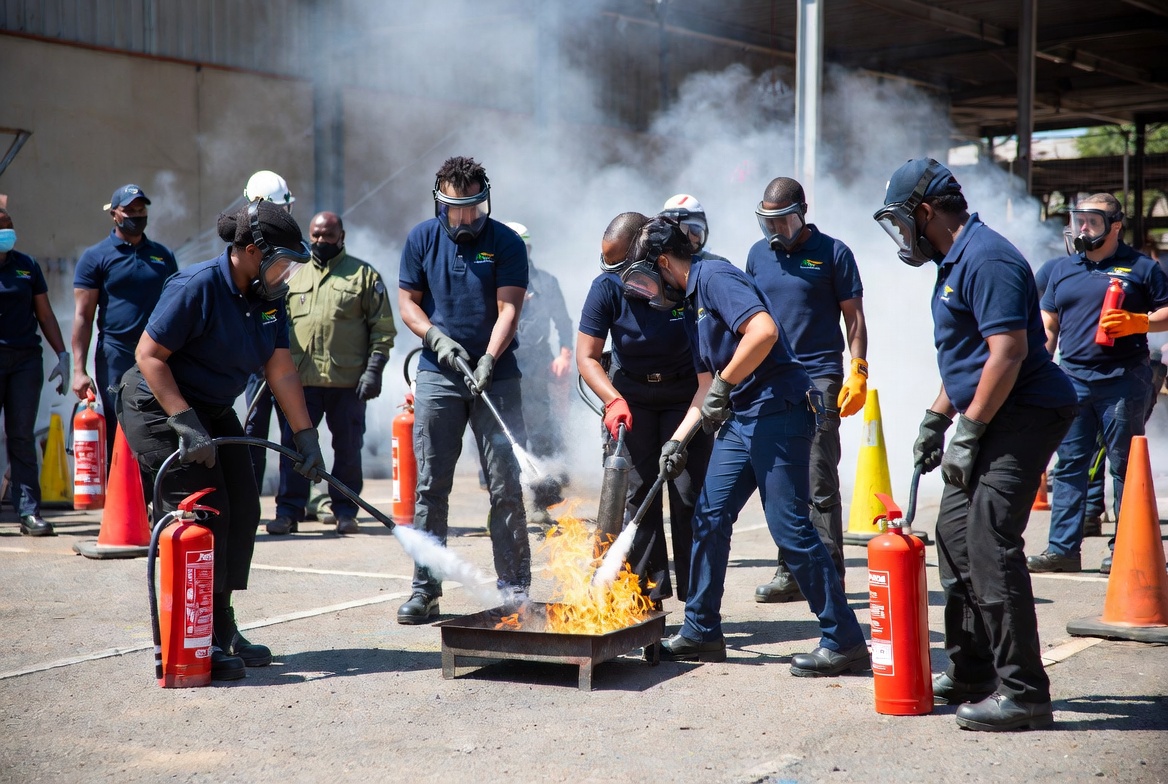
Equipment is only as good as the people using it. We offer Basic Firefighting, Fire Marshal, and Basic Fire Awareness training — practical, accredited, and CETA-aligned.
See fire training courses